


Could a two-minute video make dental consent safer?
Jun 23, 2026, 15:01
by
User Not Found
Peter Whitehouse, who secured the national winning project in the MPS Foundation UK Foundation Dentist research competition, shares their work.
Any practitioner will tell you that informed consent is an essential part of their clinical practice, enabling patients to understand what is being proposed, why it should be done, what the risks are, what other options are available, and what the consequences will be if they choose not to undergo the procedure.
When it comes to dentistry, patients often face procedures that they think are too complicated, strange, or frightening for them. One example would be root canal treatment. Although common in general practice, many patients associate root canal treatment with pain, uncertainty, or fear. Some may not fully understand why it is being recommended, what the procedure involves, or what it's realistic risks and benefits are.
This research project aimed to test whether a simple enhancement to the existing consent process for root canal treatments would make a difference. To this end, a video recording about the proposed procedure was shown to patients before a verbal discussion with a dentist.
Why root canal consent matters
To dentists, a root canal might be a routine procedure; but for patients, however, root canals are quite daunting.
Some people fear being in pain, failing treatment, getting re-infected, suffering a fractured tooth, or perhaps consider getting their tooth extracted instead. Furthermore, they might also hear horror stories about root canals told by their friends or relatives.
This matters because meaningful consent depends on understanding. For a patient to give true consent, they should understand the proposed procedure enough to make an independent decision regarding their health. For a decision to be made freely, the patient should be fully aware of all the pros and cons of the proposed treatment. Any patient who gives their consent but cannot understand what kind of risks the procedure involves was never made a fully informed choice.
From the standpoint of risk management, the nature of the discussion in relation to consent is of great importance. In many cases, complaints and claims are not merely a result of the treatment outcome but because patients feel they have not been adequately informed regarding possible complications.
The project
My project was carried out in a general dental practice over a duration of six weeks. Thirty adult patients who were scheduled for elective root canal treatment took part. They were divided into two groups.
Group A received a normal verbal informed consent discussion prior to treatment. Group B watched an educational video that lasted for two minutes before having the same discussion as Group A.
The video provided information all the important aspects needed to be understood by a patient before undergoing root canal treatment. This included what root canal treatment is, the risks involved, the advantages and alternatives. It included plain-language audio narration, subtitles, simplified diagrams, and animations.
After completion of the informed consent process, all subjects answered an anonymous questionnaire on three aspects: (1) their knowledge regarding root canal treatment, (2) their confidence level in decision-making, and (3) their satisfaction level with the process of informed consent delivery.
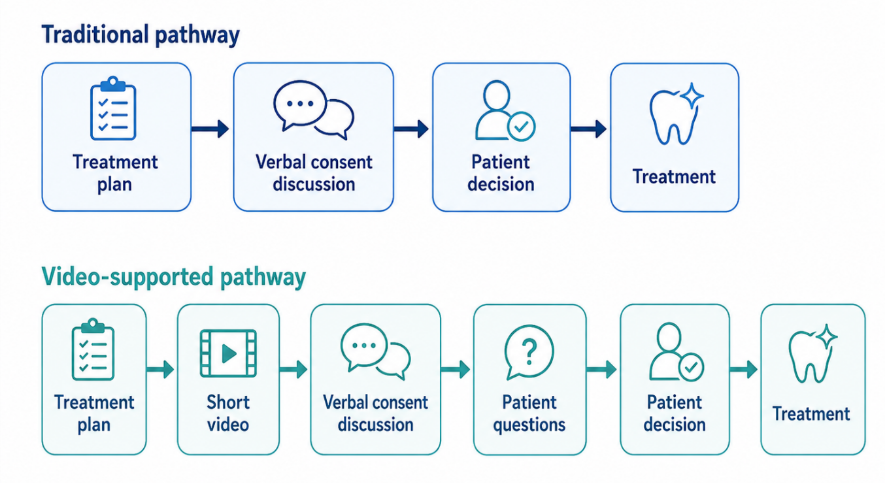
Figure 1 – Consent in traditional form vs video-assisted consent
What changed when patients watched the video?
The results showed that the video had a significant effect on the measured outcomes.
The level of understanding between the two groups was markedly different: people in the verbal-only consent Group A scored 2.80 out of 5, while patients in the video-first Group B scored 4.47 out of 5 in the knowledge test.
There was also a difference in the level of confidence between the groups: patients in Group A scored 9.93 out of 15, while patients in the Group B scored 14.07 out of 15 in the confidence test.
Similarly, patient satisfaction in the Group A was 73%, while in Group B, patient satisfaction was 100%.
Despite the study being small in size, the results suggest that a short video may make patients feel more informed and confident with their decision following the consent process.
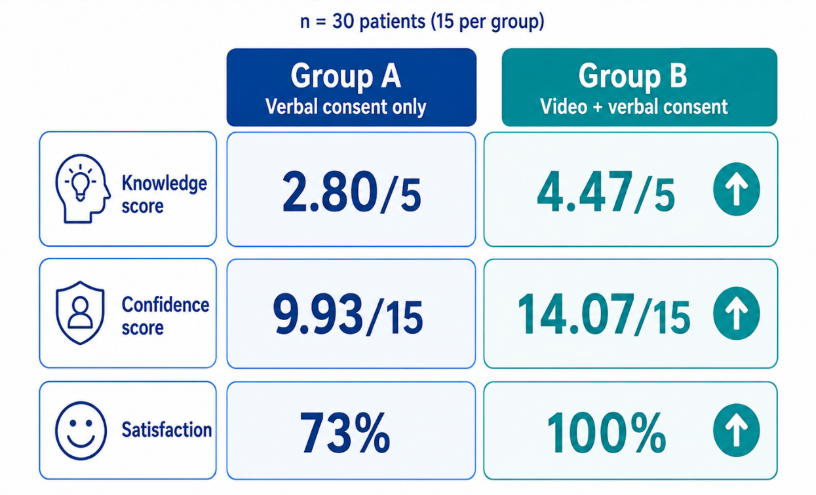
Figure 2 – What changed after adding a two-minute video?
A tool to support, not replace, clinical judgement
A primary lesson learned from this study is that video-consent cannot be viewed as an alternative to clinician-patient discussion.
Differences between patients exist: Some patients want comprehensive information, whereas others might be satisfied with a simplified explanation. There could be specific concerns the patient has regarding pain, costs, a previous bad experience, or possibility of treatment failure. Issues that are distinct need to be explored through discussion.
The benefits of introducing videos into your consent process is that these can help lay down a strong foundation. The videos ensure that the important information is provided in a standard format, but at the same time allows the dentist to conduct personalised discussion.
From a practical standpoint, this strategy could increase the effectiveness of acquiring consent while maintaining the personal nature of the process. Instead of spending the whole conversation on basic education, a clinician can focus on determining comprehension, answering queries, discussing reservations, and confirming that the patient’s consent is informed and voluntary.
Why this matters for patient safety
Patient safety involves much more than preventing mistakes, infections, and adhering to clinical procedures. Communication is equally as important.
Patients who know what is happening will be better prepared to make decisions about their care. Understanding will also help patients comply with the aftercare recommendations, detect any signs of complications, and have realistic expectations from the procedure.
In the example of root canal treatment, it is important for patients to be aware of the possibility of pain following the procedure, of the need for placing either a permanent filling or a crown later, and of the impermanence of all treatments. Discussing these things prior to the procedure will minimise the chances of patients feeling misled.
Clear consent may lead to lower levels of anxiety. Anxiety among dental patients can affect their capacity to understand and remember the information provided to them. Calm, visual guidance, which is enhanced through discussion, will help in the transfer of information to patients at their own pace.
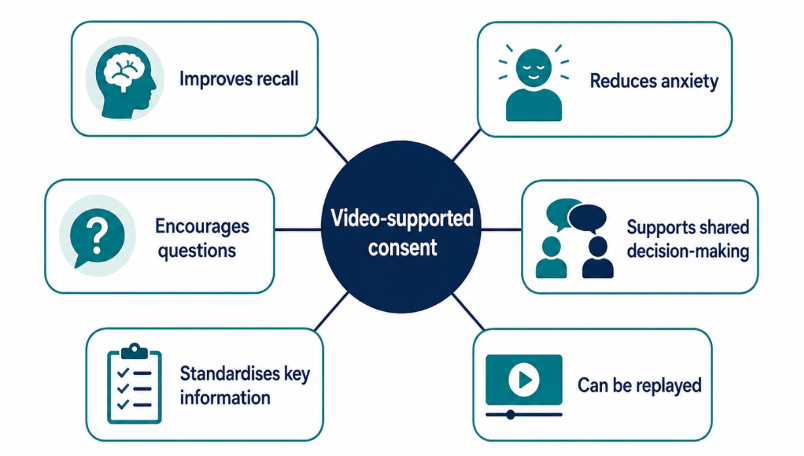
Figure 3 – Benefits of video consent
Practical benefits for dental teams
The video used in this project was short, inexpensive, and easily implementable. The video was watched by patients on a tablet before having a consent discussion. There were no problems with technology and no signs of discomfort on behalf of the patient.
This factor has special significance for dental practices facing high demand. Any new method of giving consent will need to be practical; if not, it is not likely to become a part of daily practice.
Moreover, the use of a short video might help standardise the information provided to the patient. It does not mean that all patients will receive the same, “one-size-fits-all” process of giving consent. On the contrary, the use of the video makes it less likely that some information will be omitted from the conversation.
There might also be documentation advantages as well. By recording the fact that the patient watched a specific video and further noting that the individual had a personal conversation after seeing the video, it can demonstrate how much information was imparted to the patient.
Limitations of the study
The study was done in a single dental clinic. The number of subjects participating in the study was relatively small. Therefore, the results may not be generalised to a wider population.
The study measured comprehension, confidence, and satisfaction levels of the participants right after providing consent. Long-term memory retention was not examined in this study. Additionally, no investigation was performed regarding the possible influence of the video on clinical outcomes, complaints, attendance, and treatment completion.
Future studies would need more participants from various clinics examining the general visability of video interventions in other clinical procedures, including tooth extractions, dental implants, periodontal treatment, or complicated restorations. An area of future research that would need exploration includes the creation of videos in different languages or videos designed for those with sensory limitations.
What could this look like in everyday practice?
A feasible utilisation strategy can be proposed as follows:
Patients are made aware that root canal therapy has been recommended. Before the treatment, they are sent an encrypted link to a short video, which they can watch from home or inside the clinic. Thereafter, the dentist evaluates the patient's level of comprehension, clarifies any concerns, reviews specific patient risks and other options, and obtains and records informed consent.
This approach could help shift consent away from a single conversation at the chairside and towards a more reflective, patient-centred process.
It can promote uniformity within a dental practice. For example, all the clinicians within a practice can use the recommended video as a starting point, but their conversation with the patient can be modified accordingly.
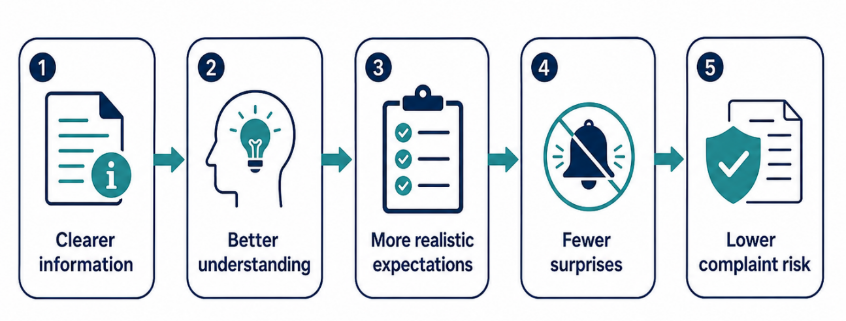
Figure 4 – How video consent can reduce risk
Reflections
The study has changed my perception of consent in dentistry. Initially, I saw consent mainly as a procedural issue before carrying out any treatment. The project showed that consent is more of a communication process in the clinical setting and is essential in maintaining safety in the practice.
A small change, such as adding a two-minute video, appeared to improve how patients understood the procedure and how confident they felt about their decision.
As the author of the project, I would summarise the key learning point as:
“Video consent allowed patients to approach the consent discussion and treatment more informed, more confident, and more prepared to ask questions.”
Conclusion
The use of video in informed consent is not a solution for all the difficulties that come with dental communication. Video-informed consent does not replace professional opinion, patient discussion, or thorough record keeping. Nevertheless, the current study shows that video-informed consent can be a useful tool.
As regards root canal treatment, a short video helped patients understand the treatment, boosted their confidence in making decisions, and made them happier with the process of giving consent.
In a profession where trust, communication, and patient safety go hand in hand, such tools need serious consideration.
The next step includes assessing the possibilities for expanding upon this type of resource, distributing it safely and effectively, adapting it for various demographics, and incorporating it into regular dental practice. A two-minute video may seem like a small intervention, but for patients facing an unfamiliar procedure, it could make the decision feel clearer, calmer, and safer.
The dentolegal journal from Dental Protection
Latest
Could a two-minute video make dental consent safer?
Jun 23, 2026, 15:01
by
User Not Found
Peter Whitehouse, who secured the national winning project in the MPS Foundation UK Foundation Dentist research competition, shares their work.
Any practitioner will tell you that informed consent is an essential part of their clinical practice, enabling patients to understand what is being proposed, why it should be done, what the risks are, what other options are available, and what the consequences will be if they choose not to undergo the procedure.
When it comes to dentistry, patients often face procedures that they think are too complicated, strange, or frightening for them. One example would be root canal treatment. Although common in general practice, many patients associate root canal treatment with pain, uncertainty, or fear. Some may not fully understand why it is being recommended, what the procedure involves, or what it's realistic risks and benefits are.
This research project aimed to test whether a simple enhancement to the existing consent process for root canal treatments would make a difference. To this end, a video recording about the proposed procedure was shown to patients before a verbal discussion with a dentist.
Why root canal consent matters
To dentists, a root canal might be a routine procedure; but for patients, however, root canals are quite daunting.
Some people fear being in pain, failing treatment, getting re-infected, suffering a fractured tooth, or perhaps consider getting their tooth extracted instead. Furthermore, they might also hear horror stories about root canals told by their friends or relatives.
This matters because meaningful consent depends on understanding. For a patient to give true consent, they should understand the proposed procedure enough to make an independent decision regarding their health. For a decision to be made freely, the patient should be fully aware of all the pros and cons of the proposed treatment. Any patient who gives their consent but cannot understand what kind of risks the procedure involves was never made a fully informed choice.
From the standpoint of risk management, the nature of the discussion in relation to consent is of great importance. In many cases, complaints and claims are not merely a result of the treatment outcome but because patients feel they have not been adequately informed regarding possible complications.
The project
My project was carried out in a general dental practice over a duration of six weeks. Thirty adult patients who were scheduled for elective root canal treatment took part. They were divided into two groups.
Group A received a normal verbal informed consent discussion prior to treatment. Group B watched an educational video that lasted for two minutes before having the same discussion as Group A.
The video provided information all the important aspects needed to be understood by a patient before undergoing root canal treatment. This included what root canal treatment is, the risks involved, the advantages and alternatives. It included plain-language audio narration, subtitles, simplified diagrams, and animations.
After completion of the informed consent process, all subjects answered an anonymous questionnaire on three aspects: (1) their knowledge regarding root canal treatment, (2) their confidence level in decision-making, and (3) their satisfaction level with the process of informed consent delivery.
Figure 1 – Consent in traditional form vs video-assisted consent
What changed when patients watched the video?
The results showed that the video had a significant effect on the measured outcomes.
The level of understanding between the two groups was markedly different: people in the verbal-only consent Group A scored 2.80 out of 5, while patients in the video-first Group B scored 4.47 out of 5 in the knowledge test.
There was also a difference in the level of confidence between the groups: patients in Group A scored 9.93 out of 15, while patients in the Group B scored 14.07 out of 15 in the confidence test.
Similarly, patient satisfaction in the Group A was 73%, while in Group B, patient satisfaction was 100%.
Despite the study being small in size, the results suggest that a short video may make patients feel more informed and confident with their decision following the consent process.
Figure 2 – What changed after adding a two-minute video?
A tool to support, not replace, clinical judgement
A primary lesson learned from this study is that video-consent cannot be viewed as an alternative to clinician-patient discussion.
Differences between patients exist: Some patients want comprehensive information, whereas others might be satisfied with a simplified explanation. There could be specific concerns the patient has regarding pain, costs, a previous bad experience, or possibility of treatment failure. Issues that are distinct need to be explored through discussion.
The benefits of introducing videos into your consent process is that these can help lay down a strong foundation. The videos ensure that the important information is provided in a standard format, but at the same time allows the dentist to conduct personalised discussion.
From a practical standpoint, this strategy could increase the effectiveness of acquiring consent while maintaining the personal nature of the process. Instead of spending the whole conversation on basic education, a clinician can focus on determining comprehension, answering queries, discussing reservations, and confirming that the patient’s consent is informed and voluntary.
Why this matters for patient safety
Patient safety involves much more than preventing mistakes, infections, and adhering to clinical procedures. Communication is equally as important.
Patients who know what is happening will be better prepared to make decisions about their care. Understanding will also help patients comply with the aftercare recommendations, detect any signs of complications, and have realistic expectations from the procedure.
In the example of root canal treatment, it is important for patients to be aware of the possibility of pain following the procedure, of the need for placing either a permanent filling or a crown later, and of the impermanence of all treatments. Discussing these things prior to the procedure will minimise the chances of patients feeling misled.
Clear consent may lead to lower levels of anxiety. Anxiety among dental patients can affect their capacity to understand and remember the information provided to them. Calm, visual guidance, which is enhanced through discussion, will help in the transfer of information to patients at their own pace.
Figure 3 – Benefits of video consent
Practical benefits for dental teams
The video used in this project was short, inexpensive, and easily implementable. The video was watched by patients on a tablet before having a consent discussion. There were no problems with technology and no signs of discomfort on behalf of the patient.
This factor has special significance for dental practices facing high demand. Any new method of giving consent will need to be practical; if not, it is not likely to become a part of daily practice.
Moreover, the use of a short video might help standardise the information provided to the patient. It does not mean that all patients will receive the same, “one-size-fits-all” process of giving consent. On the contrary, the use of the video makes it less likely that some information will be omitted from the conversation.
There might also be documentation advantages as well. By recording the fact that the patient watched a specific video and further noting that the individual had a personal conversation after seeing the video, it can demonstrate how much information was imparted to the patient.
Limitations of the study
The study was done in a single dental clinic. The number of subjects participating in the study was relatively small. Therefore, the results may not be generalised to a wider population.
The study measured comprehension, confidence, and satisfaction levels of the participants right after providing consent. Long-term memory retention was not examined in this study. Additionally, no investigation was performed regarding the possible influence of the video on clinical outcomes, complaints, attendance, and treatment completion.
Future studies would need more participants from various clinics examining the general visability of video interventions in other clinical procedures, including tooth extractions, dental implants, periodontal treatment, or complicated restorations. An area of future research that would need exploration includes the creation of videos in different languages or videos designed for those with sensory limitations.
What could this look like in everyday practice?
A feasible utilisation strategy can be proposed as follows:
Patients are made aware that root canal therapy has been recommended. Before the treatment, they are sent an encrypted link to a short video, which they can watch from home or inside the clinic. Thereafter, the dentist evaluates the patient's level of comprehension, clarifies any concerns, reviews specific patient risks and other options, and obtains and records informed consent.
This approach could help shift consent away from a single conversation at the chairside and towards a more reflective, patient-centred process.
It can promote uniformity within a dental practice. For example, all the clinicians within a practice can use the recommended video as a starting point, but their conversation with the patient can be modified accordingly.
Figure 4 – How video consent can reduce risk
Reflections
The study has changed my perception of consent in dentistry. Initially, I saw consent mainly as a procedural issue before carrying out any treatment. The project showed that consent is more of a communication process in the clinical setting and is essential in maintaining safety in the practice.
A small change, such as adding a two-minute video, appeared to improve how patients understood the procedure and how confident they felt about their decision.
As the author of the project, I would summarise the key learning point as:
“Video consent allowed patients to approach the consent discussion and treatment more informed, more confident, and more prepared to ask questions.”
Conclusion
The use of video in informed consent is not a solution for all the difficulties that come with dental communication. Video-informed consent does not replace professional opinion, patient discussion, or thorough record keeping. Nevertheless, the current study shows that video-informed consent can be a useful tool.
As regards root canal treatment, a short video helped patients understand the treatment, boosted their confidence in making decisions, and made them happier with the process of giving consent.
In a profession where trust, communication, and patient safety go hand in hand, such tools need serious consideration.
The next step includes assessing the possibilities for expanding upon this type of resource, distributing it safely and effectively, adapting it for various demographics, and incorporating it into regular dental practice. A two-minute video may seem like a small intervention, but for patients facing an unfamiliar procedure, it could make the decision feel clearer, calmer, and safer.


Global news
Could a two-minute video make dental consent safer?
Jun 23, 2026, 15:01
by
User Not Found
Peter Whitehouse, who secured the national winning project in the MPS Foundation UK Foundation Dentist research competition, shares their work.
Any practitioner will tell you that informed consent is an essential part of their clinical practice, enabling patients to understand what is being proposed, why it should be done, what the risks are, what other options are available, and what the consequences will be if they choose not to undergo the procedure.
When it comes to dentistry, patients often face procedures that they think are too complicated, strange, or frightening for them. One example would be root canal treatment. Although common in general practice, many patients associate root canal treatment with pain, uncertainty, or fear. Some may not fully understand why it is being recommended, what the procedure involves, or what it's realistic risks and benefits are.
This research project aimed to test whether a simple enhancement to the existing consent process for root canal treatments would make a difference. To this end, a video recording about the proposed procedure was shown to patients before a verbal discussion with a dentist.
Why root canal consent matters
To dentists, a root canal might be a routine procedure; but for patients, however, root canals are quite daunting.
Some people fear being in pain, failing treatment, getting re-infected, suffering a fractured tooth, or perhaps consider getting their tooth extracted instead. Furthermore, they might also hear horror stories about root canals told by their friends or relatives.
This matters because meaningful consent depends on understanding. For a patient to give true consent, they should understand the proposed procedure enough to make an independent decision regarding their health. For a decision to be made freely, the patient should be fully aware of all the pros and cons of the proposed treatment. Any patient who gives their consent but cannot understand what kind of risks the procedure involves was never made a fully informed choice.
From the standpoint of risk management, the nature of the discussion in relation to consent is of great importance. In many cases, complaints and claims are not merely a result of the treatment outcome but because patients feel they have not been adequately informed regarding possible complications.
The project
My project was carried out in a general dental practice over a duration of six weeks. Thirty adult patients who were scheduled for elective root canal treatment took part. They were divided into two groups.
Group A received a normal verbal informed consent discussion prior to treatment. Group B watched an educational video that lasted for two minutes before having the same discussion as Group A.
The video provided information all the important aspects needed to be understood by a patient before undergoing root canal treatment. This included what root canal treatment is, the risks involved, the advantages and alternatives. It included plain-language audio narration, subtitles, simplified diagrams, and animations.
After completion of the informed consent process, all subjects answered an anonymous questionnaire on three aspects: (1) their knowledge regarding root canal treatment, (2) their confidence level in decision-making, and (3) their satisfaction level with the process of informed consent delivery.
Figure 1 – Consent in traditional form vs video-assisted consent
What changed when patients watched the video?
The results showed that the video had a significant effect on the measured outcomes.
The level of understanding between the two groups was markedly different: people in the verbal-only consent Group A scored 2.80 out of 5, while patients in the video-first Group B scored 4.47 out of 5 in the knowledge test.
There was also a difference in the level of confidence between the groups: patients in Group A scored 9.93 out of 15, while patients in the Group B scored 14.07 out of 15 in the confidence test.
Similarly, patient satisfaction in the Group A was 73%, while in Group B, patient satisfaction was 100%.
Despite the study being small in size, the results suggest that a short video may make patients feel more informed and confident with their decision following the consent process.
Figure 2 – What changed after adding a two-minute video?
A tool to support, not replace, clinical judgement
A primary lesson learned from this study is that video-consent cannot be viewed as an alternative to clinician-patient discussion.
Differences between patients exist: Some patients want comprehensive information, whereas others might be satisfied with a simplified explanation. There could be specific concerns the patient has regarding pain, costs, a previous bad experience, or possibility of treatment failure. Issues that are distinct need to be explored through discussion.
The benefits of introducing videos into your consent process is that these can help lay down a strong foundation. The videos ensure that the important information is provided in a standard format, but at the same time allows the dentist to conduct personalised discussion.
From a practical standpoint, this strategy could increase the effectiveness of acquiring consent while maintaining the personal nature of the process. Instead of spending the whole conversation on basic education, a clinician can focus on determining comprehension, answering queries, discussing reservations, and confirming that the patient’s consent is informed and voluntary.
Why this matters for patient safety
Patient safety involves much more than preventing mistakes, infections, and adhering to clinical procedures. Communication is equally as important.
Patients who know what is happening will be better prepared to make decisions about their care. Understanding will also help patients comply with the aftercare recommendations, detect any signs of complications, and have realistic expectations from the procedure.
In the example of root canal treatment, it is important for patients to be aware of the possibility of pain following the procedure, of the need for placing either a permanent filling or a crown later, and of the impermanence of all treatments. Discussing these things prior to the procedure will minimise the chances of patients feeling misled.
Clear consent may lead to lower levels of anxiety. Anxiety among dental patients can affect their capacity to understand and remember the information provided to them. Calm, visual guidance, which is enhanced through discussion, will help in the transfer of information to patients at their own pace.
Figure 3 – Benefits of video consent
Practical benefits for dental teams
The video used in this project was short, inexpensive, and easily implementable. The video was watched by patients on a tablet before having a consent discussion. There were no problems with technology and no signs of discomfort on behalf of the patient.
This factor has special significance for dental practices facing high demand. Any new method of giving consent will need to be practical; if not, it is not likely to become a part of daily practice.
Moreover, the use of a short video might help standardise the information provided to the patient. It does not mean that all patients will receive the same, “one-size-fits-all” process of giving consent. On the contrary, the use of the video makes it less likely that some information will be omitted from the conversation.
There might also be documentation advantages as well. By recording the fact that the patient watched a specific video and further noting that the individual had a personal conversation after seeing the video, it can demonstrate how much information was imparted to the patient.
Limitations of the study
The study was done in a single dental clinic. The number of subjects participating in the study was relatively small. Therefore, the results may not be generalised to a wider population.
The study measured comprehension, confidence, and satisfaction levels of the participants right after providing consent. Long-term memory retention was not examined in this study. Additionally, no investigation was performed regarding the possible influence of the video on clinical outcomes, complaints, attendance, and treatment completion.
Future studies would need more participants from various clinics examining the general visability of video interventions in other clinical procedures, including tooth extractions, dental implants, periodontal treatment, or complicated restorations. An area of future research that would need exploration includes the creation of videos in different languages or videos designed for those with sensory limitations.
What could this look like in everyday practice?
A feasible utilisation strategy can be proposed as follows:
Patients are made aware that root canal therapy has been recommended. Before the treatment, they are sent an encrypted link to a short video, which they can watch from home or inside the clinic. Thereafter, the dentist evaluates the patient's level of comprehension, clarifies any concerns, reviews specific patient risks and other options, and obtains and records informed consent.
This approach could help shift consent away from a single conversation at the chairside and towards a more reflective, patient-centred process.
It can promote uniformity within a dental practice. For example, all the clinicians within a practice can use the recommended video as a starting point, but their conversation with the patient can be modified accordingly.
Figure 4 – How video consent can reduce risk
Reflections
The study has changed my perception of consent in dentistry. Initially, I saw consent mainly as a procedural issue before carrying out any treatment. The project showed that consent is more of a communication process in the clinical setting and is essential in maintaining safety in the practice.
A small change, such as adding a two-minute video, appeared to improve how patients understood the procedure and how confident they felt about their decision.
As the author of the project, I would summarise the key learning point as:
“Video consent allowed patients to approach the consent discussion and treatment more informed, more confident, and more prepared to ask questions.”
Conclusion
The use of video in informed consent is not a solution for all the difficulties that come with dental communication. Video-informed consent does not replace professional opinion, patient discussion, or thorough record keeping. Nevertheless, the current study shows that video-informed consent can be a useful tool.
As regards root canal treatment, a short video helped patients understand the treatment, boosted their confidence in making decisions, and made them happier with the process of giving consent.
In a profession where trust, communication, and patient safety go hand in hand, such tools need serious consideration.
The next step includes assessing the possibilities for expanding upon this type of resource, distributing it safely and effectively, adapting it for various demographics, and incorporating it into regular dental practice. A two-minute video may seem like a small intervention, but for patients facing an unfamiliar procedure, it could make the decision feel clearer, calmer, and safer.
More to explore

Leave a comment